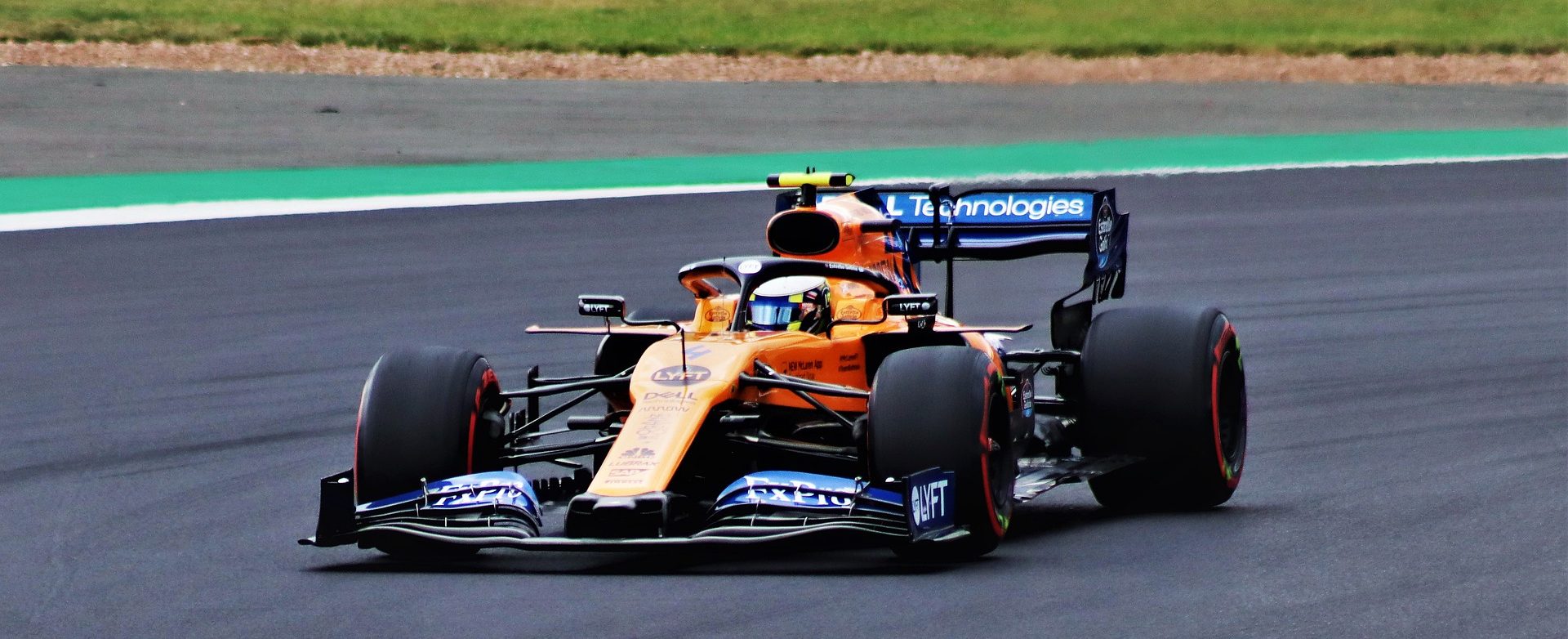
McLaren are a storied and successful team in the F1 paddock and are the second longest participating behind Ferrari who have been in the sport from the very beginning. Post-Senna’s Adelaide victory in 1993 they actually became the most successful F1 team in history (Ferrari had 103 wins from 521 races whilst McLaren had 104 from 394), this was until the Schumacher/Ferrari era in the 2000’s. Even though they are the second most successful team in the sport it has rarely been smooth sailing for McLaren even when things were going their way (to be fair nothing is smooth sailing in F1). From the late 70’s/early 80’s to the mid-90’s and mid-00’s there have been some years in which McLaren have looked nothing short of underwhelming to say the least. This piece will take a look at some of those years and will present facts and statistics to give context on how bad these years were for a team that should be in championship contention each year.
1980:
1980 was the last year that McLaren were officially registered as a New Zealand based team, becoming a British team from 1981 onwards as Ron Dennis bought a share in the company and merged his Project 4 Formula 2 team with McLaren (that is where the MP4-*insert number* chassis name originates). The M29B along with subsequent updates in the form of the M29C and M30 were not a competitive cars only achieving a best result of 4th across a 14 race season thanks to John Watson. Its longest string of points finishes was only 2 and only managed 6 points finishes all year. The car was described as ‘ghastly’, ‘a disaster’ and ‘quite diabolical’. The team finished the year 9th in the Constructors’ Championship out of 11 scoring teams with 11 points.
1994:
1994 was the first year in a three year baron spell for the team and the first year since 1980 that the team went a whole season without a win. Ron Dennis signed with a contract Peugeot for them to become an engine supplier over the Ford-Cosworth engines from 1993 for two reason. With Ford McLaren were a customer team as the main team of focus for Ford was Benetton and with Renault already on the grid, Dennis thought the French rivalry would push Peugeot into out-developing Renault and other manufacturers. This didn’t happen. The reliability of the the Peugeot engine was dreadful, it being named a ‘hand grenade’ due to the frequent and unexpected nature of its blow-outs. For example Haikkinen retired from 7 of the first 9 races of the season. There was a silver lining however as Peugeot’s failure to make a competitive engine forced Dennis to sign with Mercedes which in the long run worked out. The cars best result of the year was 2nd at Monaco with Martin Brundle and the longest string of points finishes the car managed was 3.
1995:
1995 was an alright season but below par for the standards of McLaren just a few years prior. The car featured a radical new ‘needle-nose’ front wing apposed to that of the big swooping ones of the early 90’s but despite of this the car suffered from a lack of front grip which wasn’t helped by an initially unreliable engine. A boost to the team was that they were able to get Mansell to come out of retirement to race for them but embarrassingly McLaren hadn’t built a cockpit wide enough for Mansell to fit in and thus he had to miss the first two races whilst a new cockpit was designed. Mansell didn’t stick around much longer however as he left after racing two more events having apparently been disgusted with the lack of performance. Haikkinen, now the teams number one driver, did manage two 2nd place finishes but they came late in the season. Between both Haikkinen and Blundell the MP4-10 managed just 10 points finishes and only managed 2 points finishes in a row.
2004:
McLaren had come off the back off a close title fight in 2003 even though the car wasn’t the fastest that year, instead propelled by consist points finishes from Raikkonen. So it was a shock when the 2004 car suffered from a lot of reliability issues early on in the season whilst having not improved on the chassis side of things. For example Raikkonen finished 2 points off the title in 2003 but started 2004 with 5 DNF’s in the first 7 races whilst Coulthard had another 3 DNF’s and these retirements resulted in only 5 points being picked up by McLaren in those first 7 races. One of the worst starts of a season for McLaren, certainly the worst since 1980. A radical design in the form of the MP4-19B was introduced for the French Grand Prix and was instantly and improvement. The Belgium Grand Prix saw Raikkonen take the teams only win of the year but the speed had come far too late as both titles had already been claimed. The team ended the season in 5th on 69 points and 193 points behind eventual champions Ferrari whereas they finished 3rd and only 16 points short of Ferrari in 2003 (158 to 142). The drop off in performance is one of the most dramatic in recent times.
2006:
Although not seen as a bad season 2006 was underwhelming for McLaren, the main reason being that in 2005 they had the fastest car on the grid and challenged for the title only to be hampered by poor reliability but in 2006 it was the first season since 1996 in which McLaren didn’t pick up a win. It’s another drop off in performance where there shouldn’t have been especially when they were the main team for Mercedes to supply and they had a car designed by Adrian Newey. Their number one driver, Raikkonen, managed to achieve two 2nd place finishes in Melbourne and Italy, Pedro de la Rosa managed 2nd in Hungary and Montoya managed 2nd in Monaco. Montoya left the team mid-season, evoking memories of Mansell’s departure, due to disagreements with Ron Dennis which is what allowed de la Rosa to step up. The team ended the year 3rd on 110 points, 96 points behind Renault after coming within 9 points of them and the championship the year prior. On top of this McLaren ended up leading just 60 laps across the entire season.
2015:
The reuniting of McLaren and Honda was meant to be a return to the late 80’s when McLaren won 4 straight constructors’ championships with Honda but instead it produced McLaren’s worse season in their history. The move to use Honda power was sparked by the fact that McLaren were no longer the Mercedes ‘A-team’, meaning all of the resources engine-wise from Mercedes weren’t being spent on McLaren due to Mercedes having their own team and thus, with Mercedes able to develop the chassis alongside the engine, McLaren would always, theoretically, be one step behind as they couldn’t make a chassis as effectively packaged. The Honda project was brought into F1 one year too early due to the McLaren-Mercedes deal running out in 2014 which left McLaren engine-less. One of the main problems was that both parties were stubborn on their designs and development paths which wasn’t helped by the fact Honda underestimating how much research and funding would have to be put into the project. The chassis from McLaren was alright but nothing special apart from the ‘Size-Zero’ rear packaging but even that was already seen experimented with Red Bull in the V8 era even if it wasn’t to the extent of what McLaren produced. The best result of the season was 5th for Alonso in Hungary and they only managed 5 points finishes. The team ended in 9th on 27 points. It was a truly dismal season.
2017:
After improved fortunes for the McLaren-Honda partnership in 2016 the 2017 season was meant to be a year both parties got it together and started producing a race winning package, especially when there were new aero regulations along with the fact the token system for engine development was scraped. Instead McLaren returned to the back of the grid struggling for pace and reliability and there are reasons for this from both parties. On the Honda side, because of the scrapping of the token system, they redesigned the engine making it more like the Mercedes engine structure-wise as to them it was the only way to get close to Mercedes. The redesign however brought problems unhelpfully not seen on the dyno in the form of serve vibrations. This paired with the natural unreliability of the engine meant that in the 8 days of pre-season testing McLaren used more engines than they were permitted to use for the entire upcoming season. The dyno also didn’t pick up on the lack of power the engine gave. The engine problems were described as ‘amateur’. On the McLaren side the chassis produced too much drag so not only was the engine the least powerful the McLaren chassis was also one of the least efficient in a straight line. Two examples of how bad it got was Alonso in Russia not able to complete the formation lap, instead having to retire by the second to last corner and Alonso in Spain for Free Practice 2. Alonso left the garage for his installation lap and made it 3 corners before breaking down. McLaren only managed 8 points finishes across the season with a best of 6th place coming from Alonso in Hungary and ended the year in 9th on 30 points, the teams second worse year in their history.
When It Goes Right:
Although, as pointed out, McLaren have had some bad seasons the team aren’t the second most successful for no good reason. In fact some of McLaren’s seasons standout as some of the greatest carried out by a team featuring some of F1’s most historic cars and drivers. In 1984 McLaren managed to pull away from the field after a series of rule changes that placed an emphasis on fuel efficiency. McLaren won a then record 12 victories from 16 races, attained a record 143.5 points in the constructors’ and had Prost be the first driver to equal Clark’s record of 7 wins in a season. 4 years later McLaren achieved one of the greatest seasons in F1 history. Their winning record in 1988 was outstanding with the well known 15 out of 16 race wins which translated to a 93.75% winning record which is still the highest to this day. Their car for that year, the MP4-4, is commonly heralded as the greatest F1 car ever and the one that birthed the McLaren-Honda legacy.
McLaren’s best season, pure car performance-wise, of the new millennia was 2007. Their car was the quickest on the grid and had the legs over the Ferrari’s over a season-long period. The cars performance was so consistent that their was a McLaren driver on the podium at every race and if the team have focused more on either Hamilton or Alonso in the latter part of the year the drivers title was a certainty. The ‘spy-gate’ scandal blemished the season and meant the constructors’ title went to Ferrari even though McLaren scored 14 more points than the Scuderia but the performance from the team has to be recognised and noted as a great year for the team.
McLaren have experienced the highs and lows of F1 racing and despite recent struggles (no race wins in 6 years, no podium finishes in 4) they remain a giant of the sport with massive potential. With the new rule changes being introduced for the 2021 season along with restructuring behind the scenes the future of McLaren looks to be improving. It’s hoped we will see the great team from Woking mirror some of their great years in the near future and not those of their worst.
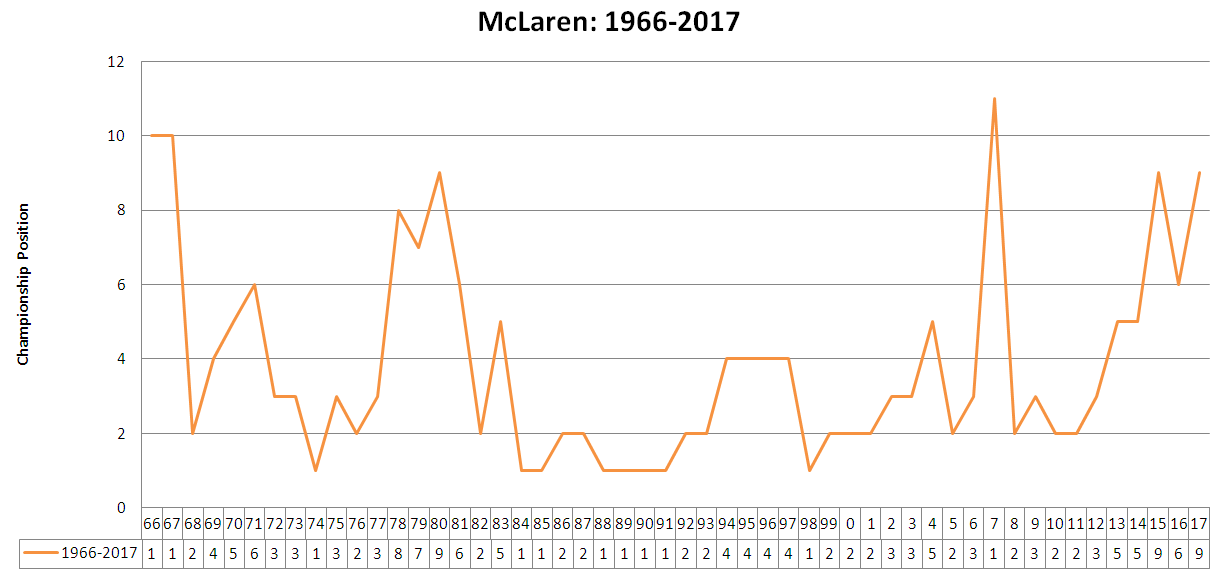
*The lower the line the better the year*
*1966 and 1967 McLaren finished 10th*
*All results tables and graphs are my own work