Other sports have established and consistent scoring systems, in football 1 goal is 1 point, in rugby a try is 5 points, in American football a touchdown is 6 points etc:, these are stats that everyone knows. Formula One however isn’t a stranger to changing up its scoring system as it has done many times over its history, the first ever scoring system being 8, 6, 4, 3, 2 with 1 point for fastest lap and the scoring system used today being 25, 18, 15, 12, 10, 8, 6, 4, 2, 1. Different scoring systems try to aim at different outcomes, for example the ’10, 8, 6…’ scoring system used from 2003 to 2009 tried to empathise consistency more and tried to take away some of the importance of race wins points-wise. This was all in an attempt to allow drivers, not necessarily in the fastest car but in competitive cars nonetheless, to challenge for titles and to allow the title fight to go as far into the season as possible in the wake of the Ferrari-Schumacher juggernaut. In 2003 it did its job, possibly too well, as Schumacher and Raikkonen finished on 93 points and 91 points respectively but Schumacher had 6 wins to Raikkonen’s 1 which is bordering on non-representative in terms of how each drivers seasons looked like on paper. That system also somewhat took away the hunger for wins as a driver in 2nd sometimes wouldn’t risk making a move on 1st just for 2 extra points. The ’25, 18, 15…’ point system has brought back the importance of a race win points-wise whilst also allowing more drivers to score points as it extends to the top 10 positions. I sometimes think though… what would close championship fights look like had they had different point systems? This piece aims to show just that, the ’10, 8, 6…’ and ’25, 18, 15…’ being the two points systems of choice. The point totals of the drivers from the original standings and the alternate standing will be shown as well as a line graph to show the progression through the season (the line graphs will be of the alternate points system). All finishes will count towards the championships as that were and are the rules attributed to the points systems in use.
Note: the seasons from 1994 to 2006 are not on this list as I’ve explored them in my ‘Would Schumacher still have 7 titles…’ piece.
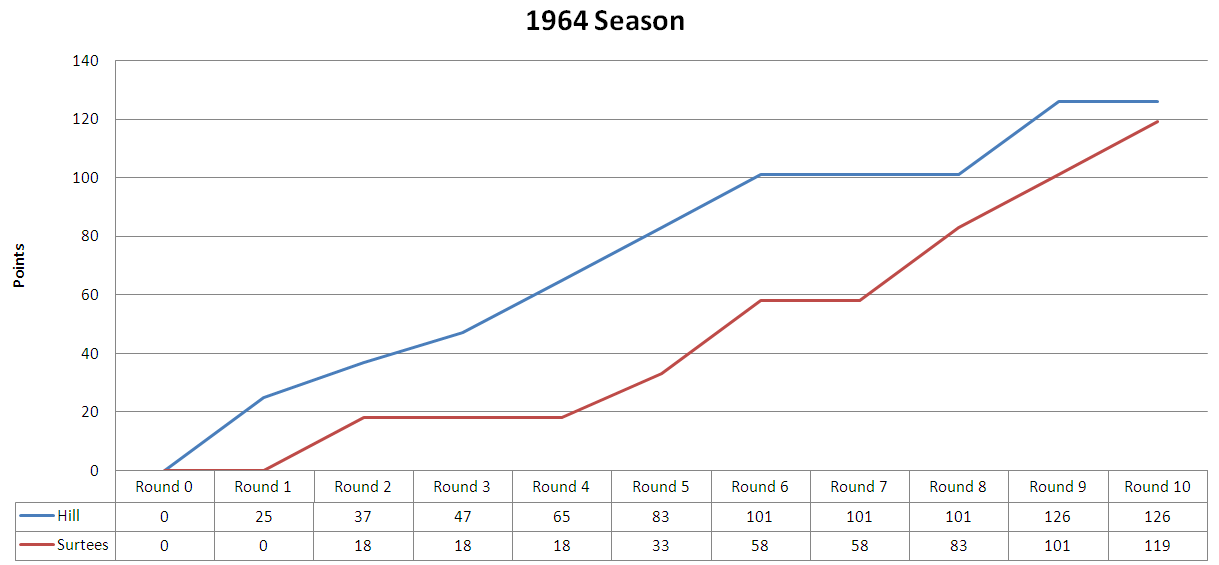
1964:
Original Point System-
- Surtees= 40 points
- Hill= 39 points
25 point system-
- Hill= 126 points
- Surtees= 119 points
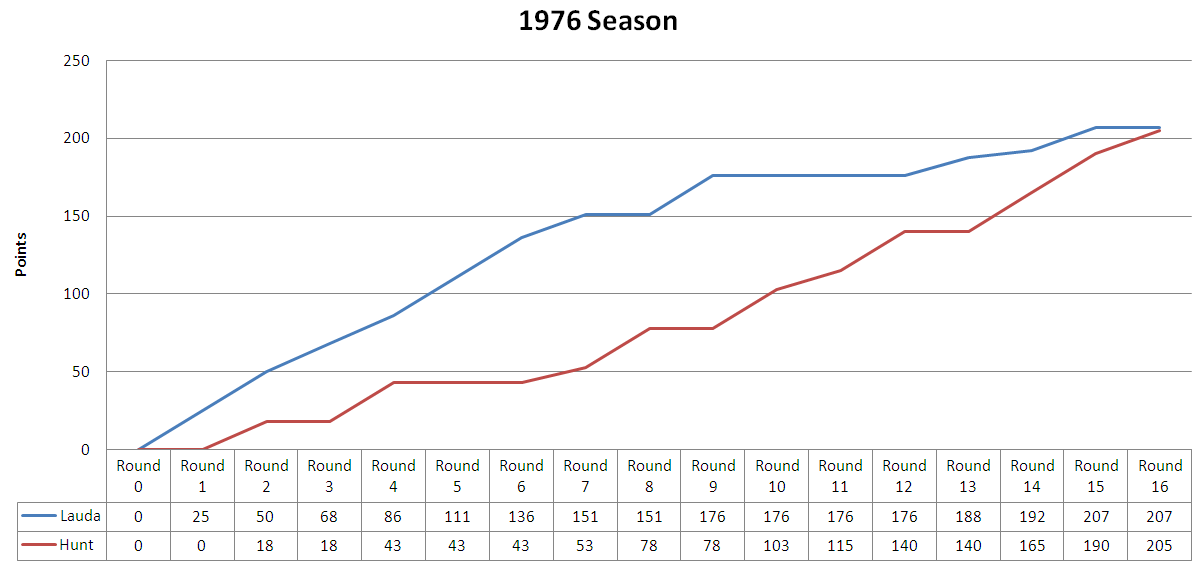
1976:
Original Points System-
- Hunt= 69 points
- Lauda= 68 points
25 Points System-
- Lauda= 207 points
- Hunt= 205 points
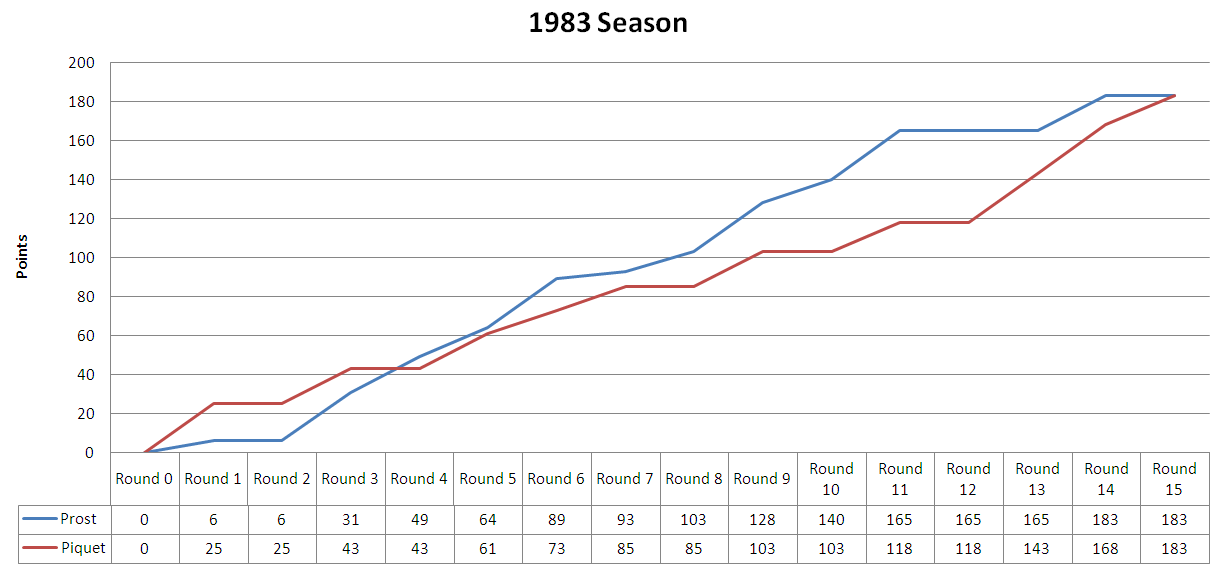
1983:
Original Points System-
- Piquet= 59 points
- Prost= 57 points
25 Points System-
- Prost= 183 points *champion on account of more wins (4 wins to 3 wins)*
- Piquet= 183 points
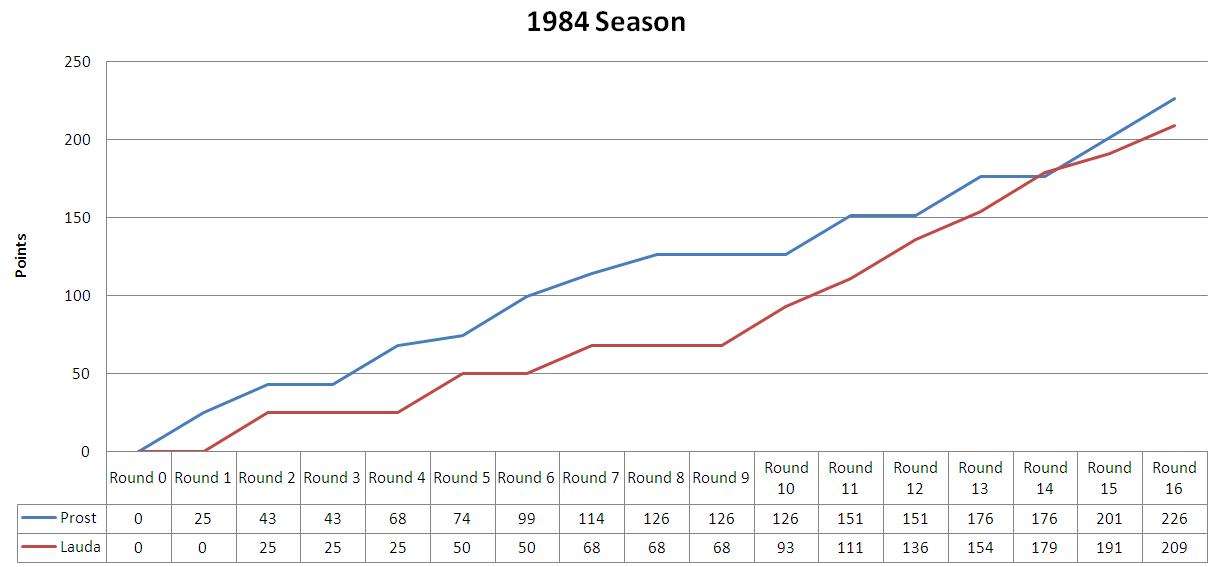
1984:
Original Points System-
- Lauda= 72 points
- Prost= 71.5 points
25 Point System-
- Prost= 226 points
- Lauda= 209 points
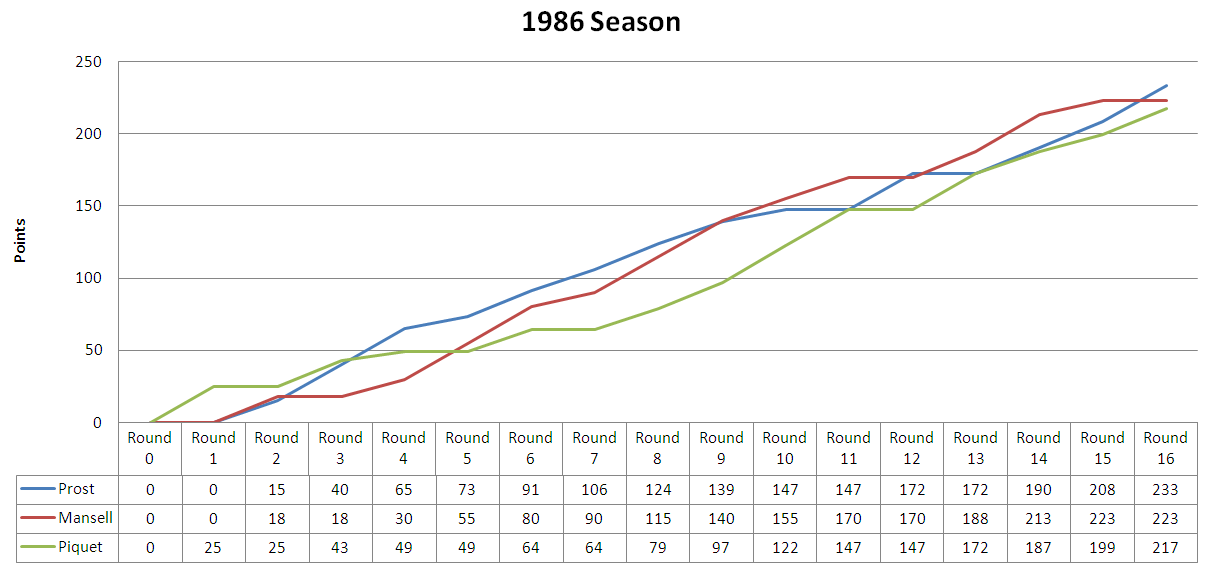
1986:
Original Points System-
- Prost= 72 points
- Mansell= 70 points
- Piquet= 69 points
25 Point System-
- Prost= 233 points
- Mansell= 223 points
- Piquet= 217 points
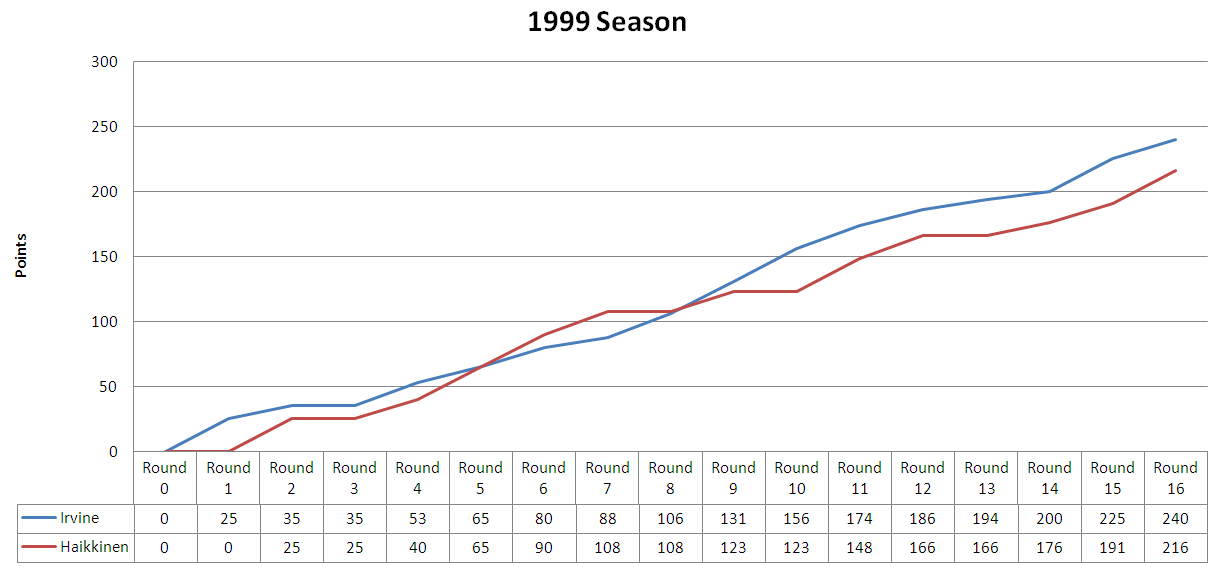
1999:
Original Points System-
- Haikkinen= 76 points
- Irvine= 74 points
25 Points System-
- Irvine= 240 points
- Haikkinen= 216 points
2007:
Original Points System-
- Raikkonen= 110 points
- Hamilton= 109 points *runner-up on account of two more 2nd places (4 to 2)*
- Alonso= 109 points
25 Points System-
- Raikkonen= 272 points
- Alonso= 266 points
- Hamilton= 265 points

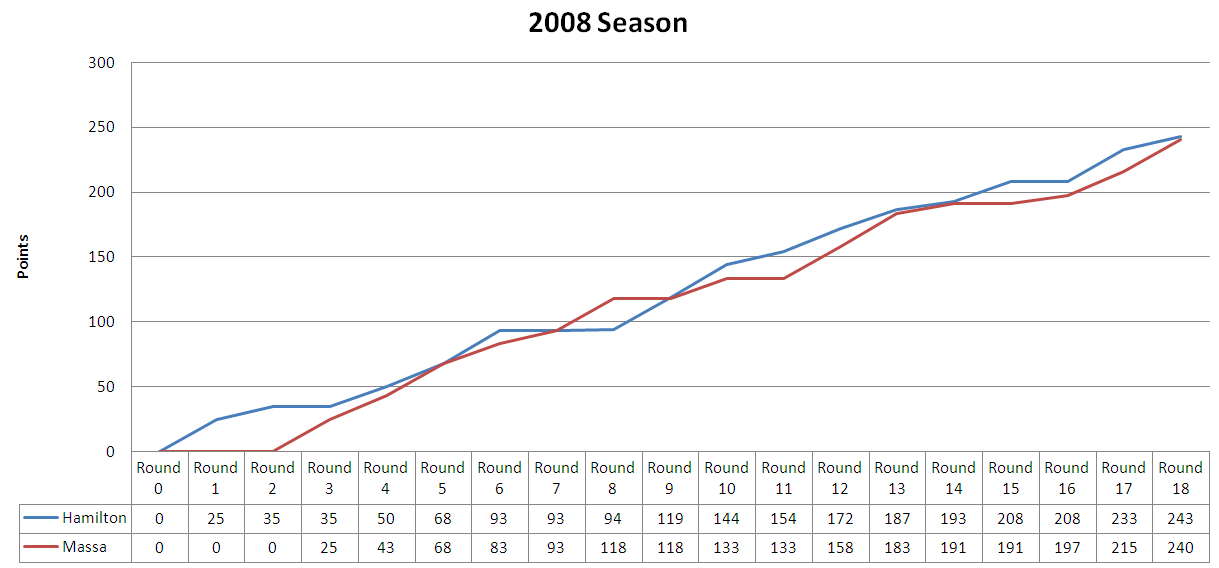
2008:
Original Points System-
- Hamilton= 98 points
- Massa= 97 points
25 Points System-
- Hamilton= 243 points
- Massa= 240 points
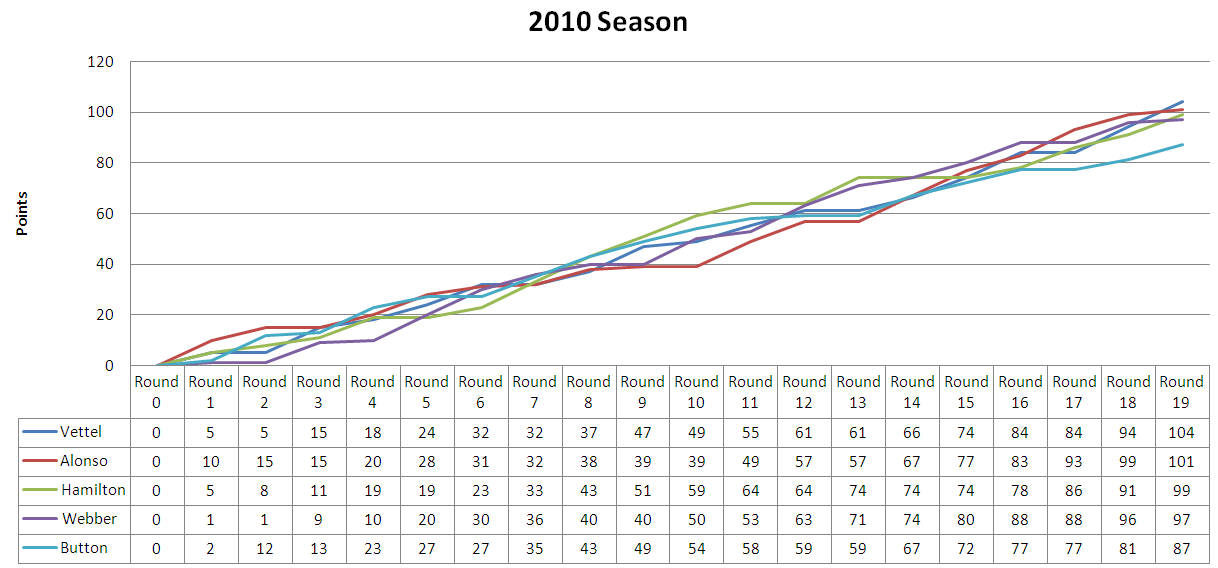
2010:
Original Points System-
- Vettel= 256 points
- Alonso= 252 points
- Webber= 242 points
- Hamilton= 240 points
- Button= 218 points
10 points system-
- Vettel= 104 points
- Alonso= 101 points
- Hamilton= 99 points
- Webber= 97 points
- Button= 87 points
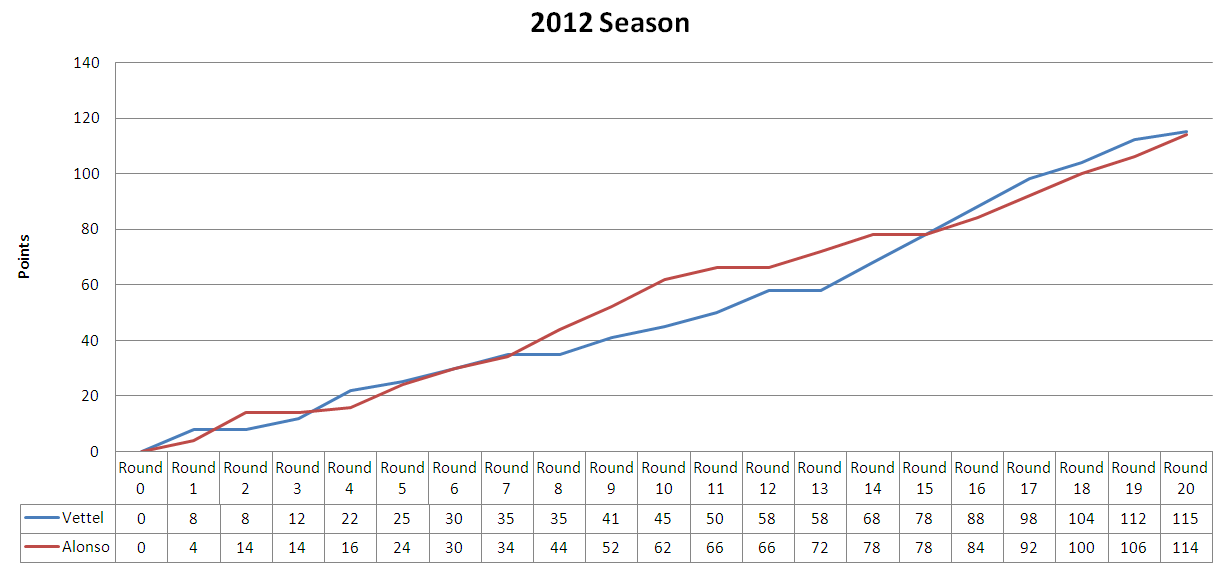
2012:
Original Points System-
- Vettel= 273 points
- Alonso= 270 points
10 Points System-
- Vettel= 115 points
- Alonso= 114 points
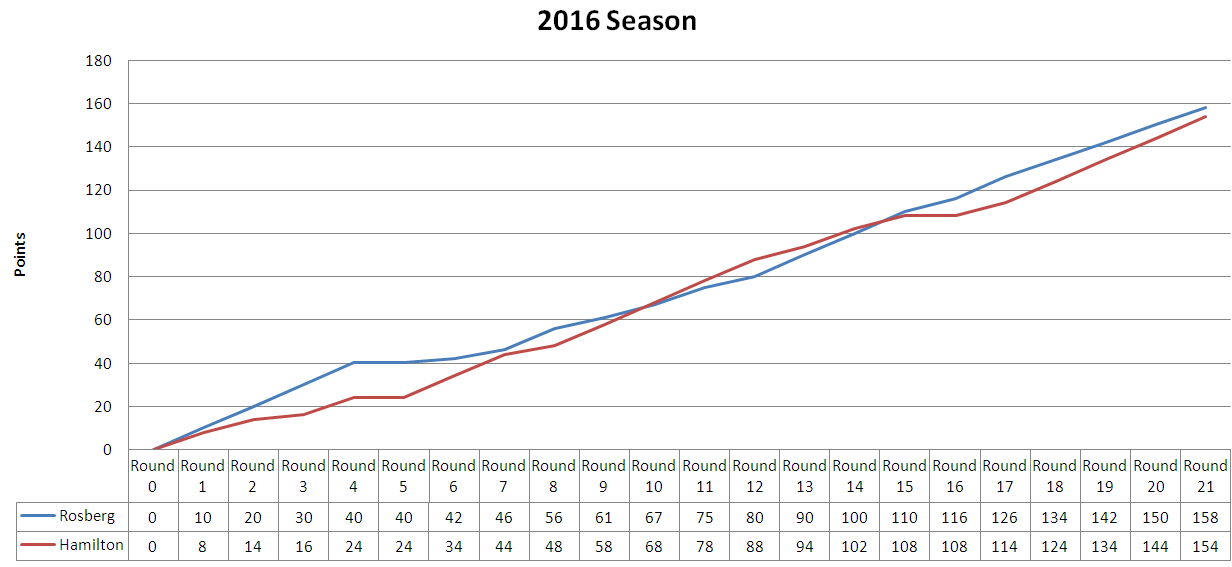
2016:
Original Points System-
- Rosberg= 385 points
- Hamilton 380 points
10 Points System-
- Rosberg= 158 points
- Hamilton= 154 points
Conclusions:
Throughout all these seasons there are only two that really surprise me, those being 1976 and 1999. 1976 is surprising because Lauda was out for a collective 4 races mid-season and the 25 point system tends to punish retirements slightly more than any other points system and so on the surface it would be expected that Hunt would win the title by a larger margin that he did originally, although it goes to show how good Lauda was at the start of the season. 1999 is slightly more surprising as you would think Haikkinen at least would have won the title, if not come close, but in this scenario the title is wrapped up before the final race! This season really shows what effect a points system can have on a season. These scenarios also gives us the first and only tied championship, with it having to be settled by win count. ’84 also went the way of Prost after Lauda’s slow start to the season. With the addition of these two extra titles Prost actually becomes a 6x world champion. Had these points rules been in effect the history books could’ve looked very different. 2007 didn’t see a different champion but it did see a change between the runners-up as Alonso beat Hamilton by one point rather than drawing on points in the original season. This same thing happened in 2010 as Hamilton finished third ahead of Webber, Vettel too had a points quirk in the alternate points as he led the championship after round 6 but in the original season he actually never led the championship apart from when it mattered most, that being after the conclusion of the final race, a feat matched by Hunt in 1976. Having an extra driver lead the championship would surely lend itself to a closer championship but that’s not the case as the points spread between the top five drivers with the 10 points system is 17 points, which is 170% of a race win whereas with the original points system the gap between the top five was 42 points which is 168% of a race win. Also if it was in any doubt that he is a worthy world champion, Rosberg still wins in 2016 given the different points system.
Overall these scenarios really help empathsise how important a points system can be and how it needs to be well balanced to represent a drivers season compared to other drivers. The wrong points system can lead to debatable and unjust standings, especially when the championship is close and the title of ‘best’ driver is up in the air when opinions are concerned. The points systems that have been in use have all been good for the time periods they were used in, in the 50’s retirements were more likely and so fastest laps and later pole positions had points attributed to them whereas now retirements are few and far between (for some teams) and thus fastest laps for example have a lessened importance in representing the speed of the car and talent of the driver and thus no longer require a point attributed to them.
*All results tables and graphs are my own work