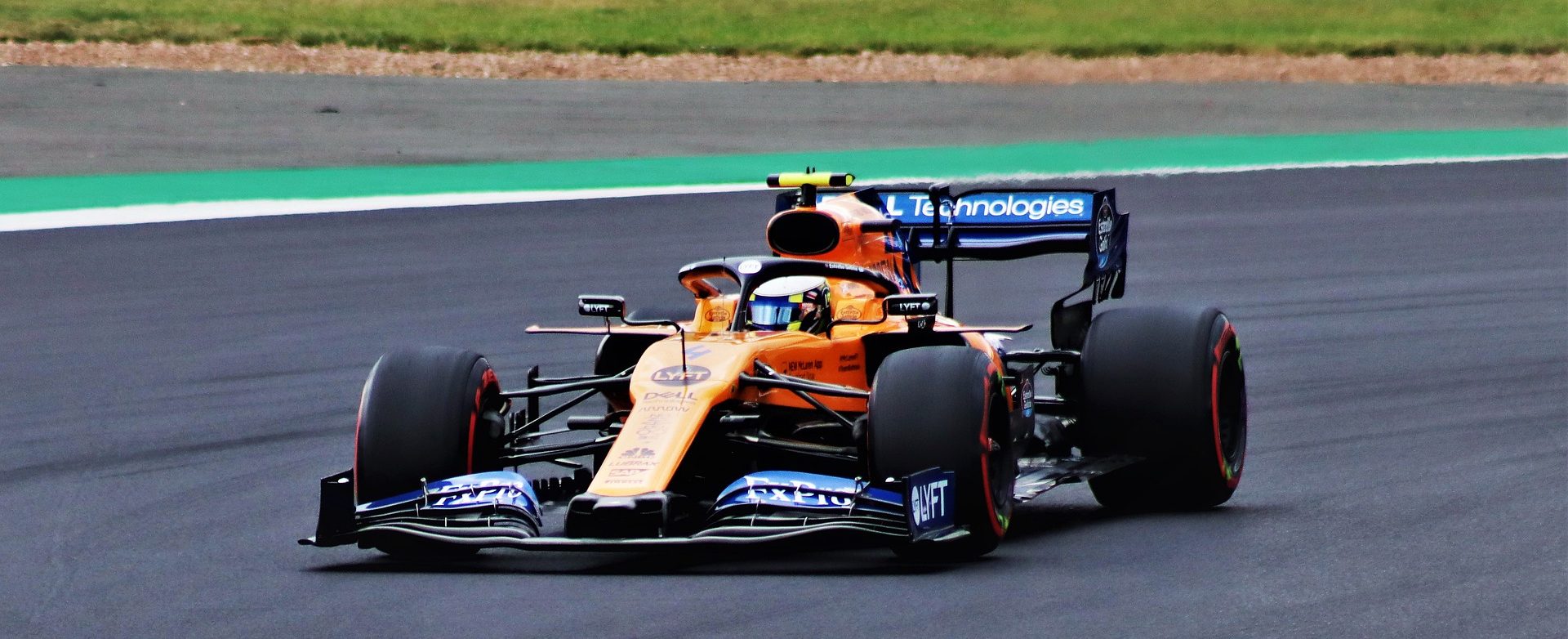
The F1 theatre is the main test bed for car manufacturers to test out new technologies for their road cars and for privateers to push the limits of technology within the confines of motor racing. As the pinnacle of motor racing F1 will remain this test bed for many years to come. As this is the case there have been multiple innovations in technology in F1 during its 69 year history for F1, for road cars and for general use in the wider world. From breakthroughs in aerodynamics to increased efficiency in car design the multiple innovations have shaped the sport in many ways and that of the world around it. This piece aims to show and explain the main innovations in technology that have come from the F1 paddock.
*Note- KERS and DRS aren’t included because they were demanded by regulation rather than sought through innovation*
Rear Engined Cars
From 1950 to 1959 all successful F1 cars were front engined as that was the technology of the time and it seemed to be working out pretty well. All that changed when Jack Brabham and Cooper showed the potential of rear engined machinery by winning both drivers and constructors championships in 1959 and 1960. The rear engine concept allowed for a better distribution of weight, lower centre of gravity and a more tightly packaged chassis which became lower and narrower.
The one downside to the rear engined concept, albeit for only a year, was that the front engined cars of Ferrari and Vanwall in particular could produce more power meaning that on the power circuits they had the advantage. But as soon as the rear engined Cooper rolled out of the pit-lane the writing was on the wall. Prior to the Cooper there had been attempts at rear engined cars by they were unsuccessful and performed inconsistently (also they weren’t consistent entrants as Cooper were).
Although not during the F1 grand prix era there was a rear engined concept called the ‘Auto Union Grand Prix Cars’. These cars had four types: A, B, C and D. From 1934-37 the A, B and C models were used and were equipped with V16 engines, from 1938-39 the D model was used and was equipped with a V12. These cars were hard to handle however as there was no aero to keep the rear planted and the car suffered from under-steer due to the front tyres not having enough grip. Despite this, between 1935 and 1937 these cars won 25 grand prix and with Mercedes they dominated the latter part of pre-war grand prix racing.
Monocoque Chassis
Up until 1962 all F1 cars were made from a multi-tubular superframe but that changed when Collin Chapman and Jim Clark rolled up at the season opener in Zandvoort with the radical Lotus 25, a car that wasn’t multi-tubular framed but instead was of a monocoque concept, something not seen before. Along with the engine becoming a stress-member the fuel tanks were placed between the driver, giving rise to the nickname ‘bathtub’, and although quite unsafe given modern standards it made the car narrower (1.5 ft narrower) and gave the car better overall balance. Furthermore the concept meant that the Lotus 25 was three times stiffer yet half as heavy as its predecessor, the Lotus 24.
On its introduction to the F1 world team boss John Cooper inspected the car and asked Chapman where he had put the tubular frames, not knowing they didn’t exist. What is more remarkable is that the idea came to Chapman whilst meeting up with some team personnel at a restaurant and that he wrote the concept that change F1 car design forever down on a napkin. The only fundamental adaptation to the concept came in 1981 when McLaren made their monocoque out of carbon fibre and not aluminium.
Slick Tyres
Prior to the 1971 season F1 grand prix tyres were treaded tyres differing slightly to those on road cars as the tread depth wasn’t as deep and the tread pattern differed as the technology developed. The reason why teams and tyre manufacturers didn’t run slicks was because they didn’t have the technology to do so. Grand prix tyres need to cover hundreds of miles per race, having to take extreme loads through corners and in the braking zones whilst being able to put the power down effectively. To do this the tyre needs to have a surface that can be stretched and moved and the type of treads on grand prix tyres allowed this surface movement whilst giving as big a contact patch as possible. At the time slicks that were made were too hard and thus weren’t able to give the required surface movement and grip and thus would be slower in the race eliminating the want to run them.
The tyre wars between Firestone and Goodyear pushed tyre technology further each year and in 1971 the technology for suitable slicks was in their hands and thus both manufactuers jumped at the opportunity to supply slicks in grand prix racing. Although there were vibration issues to begin with, both manufactuers managed to resolve the problem before seasons end. Treaded tyres were now a thing of the past. Nowadays we know first hand how far slick tyre technology has come with the 2018 Pirelli selection being varied, colourful and to new viewers of the sport… a tad confusing. Thankfully this had been simplified for 2019.
Wings + Ground Effect
1968 heralded the first appearance for a wing appendage on a grand prix car. The rear wings were tall, wobbly and dangerous as they could and would break off causing debris to be put onto the track and for the car that had lost said wing to loose a chunk of downforce and spin off the track. As well as these tall rear wings there were the additions of small wing on either side of the front nosecone. At Monaco 1969 the tall rear wings were banned on safety grounds which left the teams having to integrate a wing into the chassis almost and the result of this were essentially engine covers that bent upwards at the very rear but then these wings were phased out for a more conventional design similar to those of today. However there was the occasional design that tried something new, like the double rear wing of the 1982 Ferrari and the the arrow-like rear wing on the 1983 Tyrrell. The Ferrari concept was banned whilst the Tyrrell wing was phased out for a more conventional design.
The concept of ground effect was found in the pursuit of more downforce. The basic premise behind it was that with skirts running the length of the side-pod, air would be forced to go directly from front to back as it had no way to escape from the sides. This fast, constant and predicable movement of air under the car creates an area of low pressure which in turn sucks the car to the ground. The proper use of ground effect was on the Lotus car of 1977. Despite being less powerful that the Ferrari the Lotus 78 took four wins that season with Mario Andretti but missed out on the championship through the unreliable Ford DFV that year. For 1978 the ground effect on the Lotus was fully integrated into its design and with the DFV gremlins gone, Andretti took his first and only title whilst it was the last ever for Lotus. For 1979 a lot of teams had caught onto the idea of ground effect but the concept only lasted until 1981 as prior to the 1982 season ground effect was banned on safety grounds. The same concept is carried on in diffusers on modern F1 cars.
Turbo Engine
Despite turbos being introduced in 2014 with the new hybrid engines, the original ‘turbo era’ was the 80’s. The first turbo powered car to win a race was the Renault RS10 at the 1979 French GP driven by Jean-Pierre Jabouille. Renault were the first team to fully commit to the turbo-engine philosophy but in the early days the engines proved too unreliable to mount a championship challenge. Prost, in 1981, was a victim of this as entering the season himself and Renault were odds on favorites for both titles and whilst the car was quick, enabling Prost to win three races that year (the same as eventual champion Piquet), the reliability problems saw Prost finish 5th in the standings although only 7 points off Piquet. It is hard to see how Prost, with better reliability, wouldn’t have been champion.
Throughout the 80’s turbo engines developed, became more reliable and more powerful, thus becoming the standard for any team hoping to challenge for the title. The most famous car from this era is arguably the McLaren MP4/4 with its Honda turbo engine. The car took victory at all but one race (Monza) to have a winning percentage of 93.75% which still stands to this day. For the 1989 season turbos were banned but as mentioned they have returned as a permanent part of the new V6 Hybrid engines but, despite modern technology, the turbo engines from the 80’s had a greater max power output to the hybrids (1200 bhp to 1000 bhp) which helps put into perspective how beastly the turbo engines from the 80’s were. Apart from the massively technical hybrids the turbo is the most important and significant development to the grand prix engine.
Flappy-Paddle Gearbox
Flappy-paddles, or semi automatic gearboxes, first became prominent in F1 through Ferrari and their 1989 challenger but by the mid 90’s the concept would be the norm as stick-shifts became a thing of the past. There is a clear advantage to having this type of gear system as the driver doesn’t have to take a hand off the steering wheel to change gear.
This advantage was showcased at the 1991 Mexican Grand Prix. During practice Senna crashed at the last corner, the then fast right-hander of Peraltada. His car over-steered and flipped over once it hit the tyre wall. Although Senna did crash due to taking the corner a little faster than usual, his cause was not helped due to him having only one hand on the steering wheel from having to change gear and thus lessening his control of the car.
Like all new technology there were problems when it was first introduced. For example Gerhard Berger retired from 12 of the 15 races he entered in 1989 and his team-mate, Nigel Mansell, retired from 6 of the 15 races he entered. The problem, once solved, gave Ferrari a quick car that would be evolved into their 1990 challenger that just came up short of the title despite over a season it being the fastest race car, although it was behind the McLaren-Honda in qualifying.
General Electronics
The two most well known technological appliances put on an F1 car are surely active suspension and traction control. These two revolutions headed a whole host of other electronic gizmos that made the cars of the early 90’s the most technological F1 cars ever.
Active suspension is a system that controls the vertical movement of the wheels in relation to the cars chassis, this is different to passive suspension which changes the vertical position of the wheels due to the ground surface. The effects of active suspension is an increase in downforce due to the chassis being more stable, allowing a more predicable flow of air across the car. The increase in downforce and increased general stability allows the car to go round corners faster thus faster lap times. Despite first being used in 1983 on the Lotus, ground effect is best known from the Williams FW14B driven by Nigel Mansell and Ricardo Patrese. Ground effect was such a massive boost to the cars overall performance that it wasn’t uncommon to see the Williamses build up a 2 second gap in the first few laps.
The first controversial appearance of traction control in F1 would surely have to be with Benetton B194 from 1994 after the system was banned after 1993. The best engine that season was the Renault, planted in the rival Williams, whereas Benetton had the less powerful Ford engine. Despite this the Benetton was the fastest car out of the blocks in the hands of Michael Schumacher. This increase in speed and the cars tendency to get better than average starts made people think that the car was illegally running traction control. Despite the F.I.A. not finding any such systems it is hard to believe that the team didn’t at least experiment with the concept. From 2001 to 2007 traction was permitted to counter-act the lack of grip the grooved tyres provided in the face of ever increasing speeds.
Double Diffuser
The concept of a diffuser was far from new in the world of F1 yet there was an uproar from BMW, Renault, Red Bull and Ferrari over the diffusers that were on the Brawn, Toyota and Williams cars prior to the 2009 season. The reason for this contention was because Brawn, Toyota and Williams all exploited a loophole in the new aero regulations for that year in that they created a ‘double decker diffuser’.
The diffuser sits between the two rear wheels beneath the rear wing. The main aim of the diffuser is to increase the speed of the airflow under the car (the venturi effect). The increase in speed of the airflow increases downforce at the rear of the car. The double decker diffuser, quite namely, is essentially part of a diffuser on top of the regular diffuser. The struts on the regular diffuser are placed on its flat top to to have greater downforce generating properties. This concept was eventually made legal by the F.I.A. and it is one of the reasons why the Brawn GP car was so good that year.
Conclusions
From rear engined cars to ground effect to active suspension there have been multiple technological break throughs that have changed to face of the sport and of road cars. From all of them it is difficult to pick a particular one that is the most innovative but if one had to be chosen it would be the invention of the monocoque chassis as that changed the fundamental construction of the F1 car which future innovations would be put onto. Although the rear-engined concept is right up there as that too was changing fundamental elements of the F1 car.
With F1 entering a new age in 2021 it will be interesting to see what technologies will be invented and implemented to have a competitive edge. It will also be interesting to see if the rising popularity of Formula E will pressure F1 to introduced more electric technology despite F1 and Formula E being separate in the goals and audience. Whatever the case F1 will be at the forefront of technological break throughs for many years to come.